
As coal-fired power plants retire and ash ponds are closed, utilities and material processors are faced with a growing challenge: recovering millions of tons of stored fly ash for beneficial reuse rather than leaving it in place indefinitely.
The problem is moisture.
Much of the fly ash stored in ponds and landfills contains too much moisture to be used in high-value applications like supplementary cementitious materials (SCMs). Traditional drying methods often rely on large natural gas-fired systems that require significant capital investment, consume large amounts of energy, and increase operating complexity — all while adding a combustion source to the process.
Shockwave developed a technology to solve this challenge without relying on natural gas or added heat.
Recover More Than Fly Ash
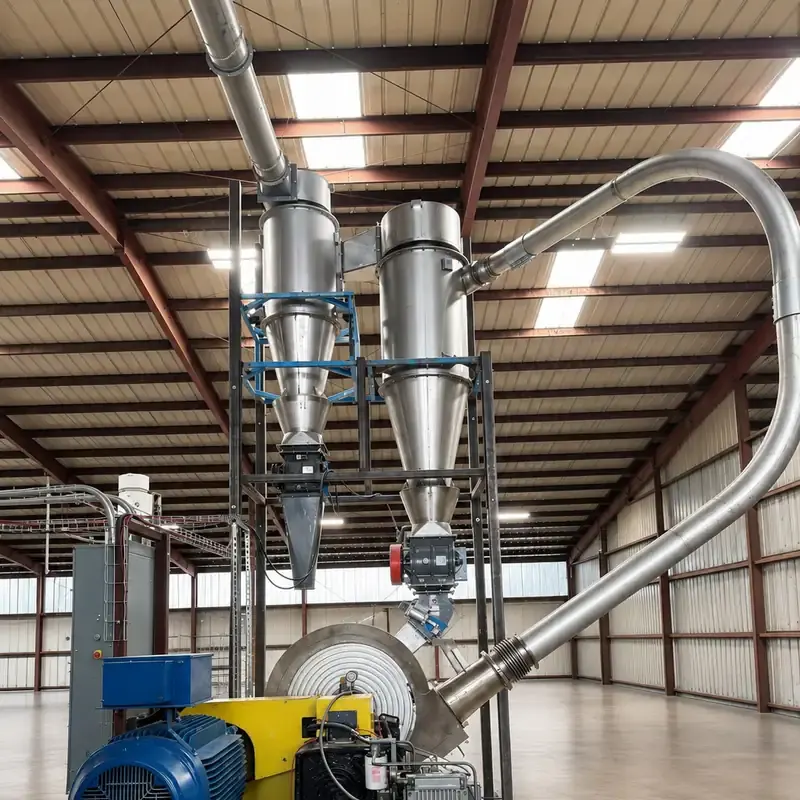
Our patented technology transforms wet fly ash into a dry, consistent material ready for beneficial reuse through a single continuous process that simultaneously dries and mills the material.
Unlike conventional systems that require separate drying and milling operations, Shockwave combines both into one fully electric process — reducing equipment, lowering operating costs, and eliminating the need for natural gas entirely. This also simplifies permitting and reduces the facility’s overall environmental footprint.
How the Technology Works
- 01FeedPonds, landfills, or active collection
- 02DryHigh-velocity airflow — no combustion
- 03MillSimultaneous particle size reduction
- 04RecoverDry, testable, ready for reuse
- 01FeedPonds, landfills, or active collection
- 02DryHigh-velocity airflow — no combustion
- 03MillSimultaneous particle size reduction
- 04RecoverDry, testable, ready for reuse
Feed — Fly ash from ponds, landfills, or active collection systems enters the processing system.
Dry — A high-velocity airflow removes moisture without combustion or natural gas, preparing the material for reuse.
Mill — As moisture is removed, the material is simultaneously milled to create a more consistent particle size for downstream applications.
Recover — The result is a dry, processed fly ash suitable for testing, storage, or beneficial reuse in commercial applications.
Have ash you need to dry and recover?
Why Utilities and Material Processors Choose Shockwave
- Recover valuable fly ash from ponds and landfills
- Reduce moisture and improve material consistency
- Eliminate natural gas from the drying process
- Combine drying and milling into one continuous operation
- Reduce equipment footprint and operational complexity
- Support beneficial reuse and sustainability initiatives
Proven Through Results
Shockwave has completed both an internal R&D trial and a utility-commissioned pilot on coal fly ash, consistently reducing moisture from the 15–19% range down to approximately 3–4% using ambient air only — no natural gas or inlet heat required. In the most recent pilot, fly ash sourced directly from an active utility ash pond was dried from 14.88% to 3.75% moisture across three passes, with throughput ranging from roughly 11,600 to 14,600 lbs/hr and 88% of finished product finer than 53 microns, meeting typical SCM fineness targets. Results have been consistent across trials conducted more than a year apart on feedstock from different sources, supporting the platform’s commercial readiness.
Active utility ash pond
Three passes, ambient air
Sustained pilot rate
Meets typical SCM targets
Beneficial Reuse Opportunities
Recovered fly ash can be used in a variety of applications, including:
- Supplementary cementitious materials (SCMs)
- Ready-mix and precast concrete
- Road base stabilization
- Flowable fill
- Brick and aggregate manufacturing
- Environmental remediation
Ready to Evaluate Your Material?
Every material is different. Our team can review your application, discuss your processing goals, and determine the best path forward — including pilot-scale testing.
Next Steps
- Discuss your application
- Schedule a pilot trial
- Evaluate your processing goals
Contact us to start the conversation.